Arthur Avenue
One avenue, a long memory
The commercial spine of Belmont, from the tobacco estate that named the neighborhood to the indoor market that still opens every morning.
_001.jpg)
Richard Joseph Spinelli walks Arthur Avenue most days, since the Sandhills Real Estate buildings stand within two blocks of it on both sides, and this page is his account of the avenue as a place rather than as a food destination, though the food gets its own page.
The avenue itself
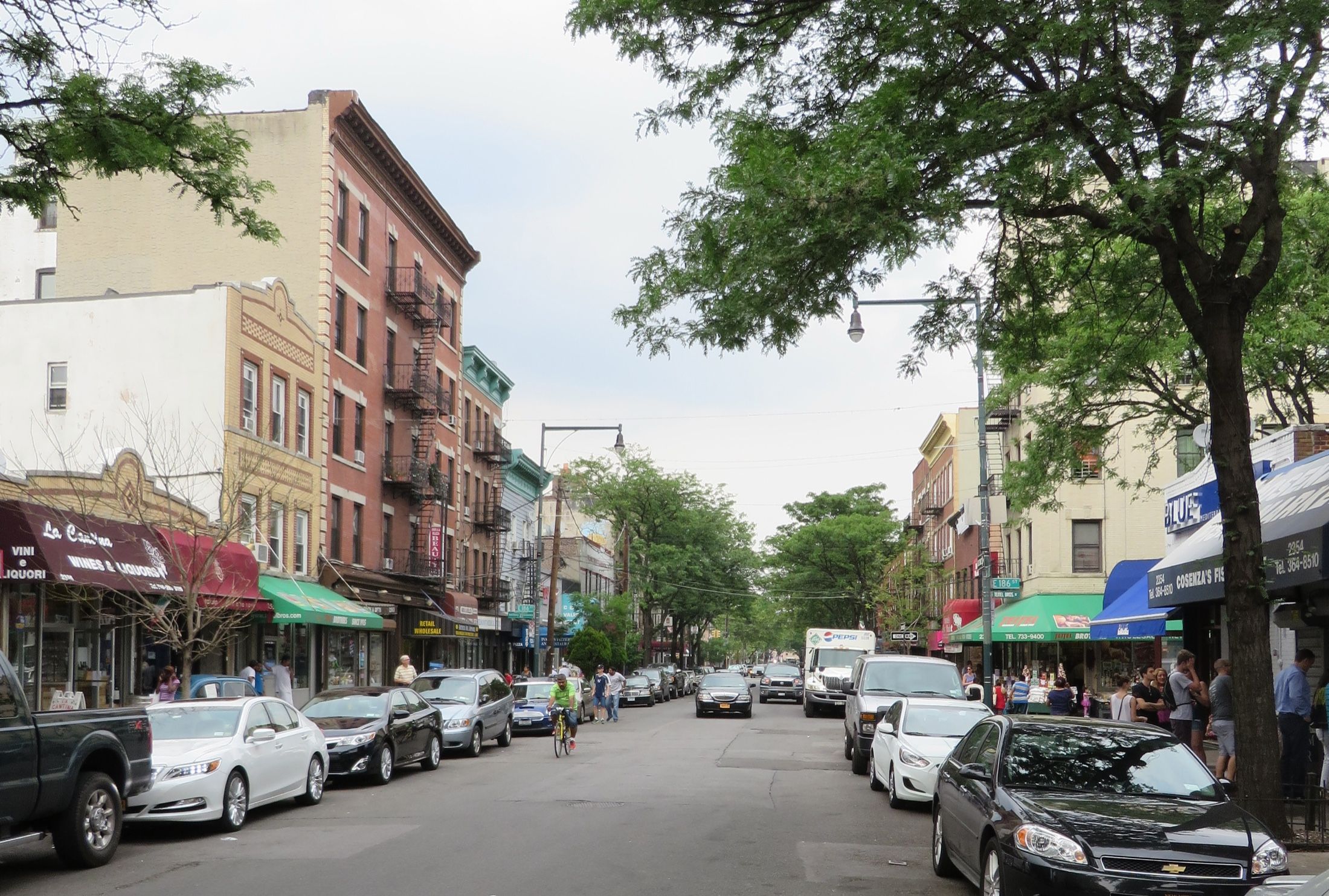
Arthur Avenue runs about 1.2 miles from Crotona Park North in Tremont at its southern end to Fordham Road at its northern end. The stretch people mean when they say Arthur Avenue is the handful of blocks either side of East 187th Street, where the restaurants, the markets and the pastry shops cluster and where the sidewalks are busy from morning until late. South of that the avenue turns residential and then industrial as it heads toward the park.
How it got the name
Belmont takes its name from Belle Mont, the estate Pierre Abraham Lorillard built along the Bronx River in 1760 for his tobacco business. When manufacturing left for New Jersey in 1870 the estate passed to Catherine Lorillard Wolfe, who named the main street for President Chester A. Arthur and gave the mansion to become St Barnabas Hospital. The avenue was named before a single Italian family arrived; the neighborhood everyone knows came afterward.
How it became Little Italy
Construction of the Bronx Zoo and the New York Botanical Garden began in 1898, and the work drew Italian immigrants to the blocks just west of the parks. By the early twentieth century Belmont was established as the Bronx's Little Italy, one of the Italian colonies of the borough, and Arthur Avenue was its market street. The Belmont Business Improvement District, which speaks for the shops and restaurants today, keeps that history and is the source this page leans on.
The Retail Market
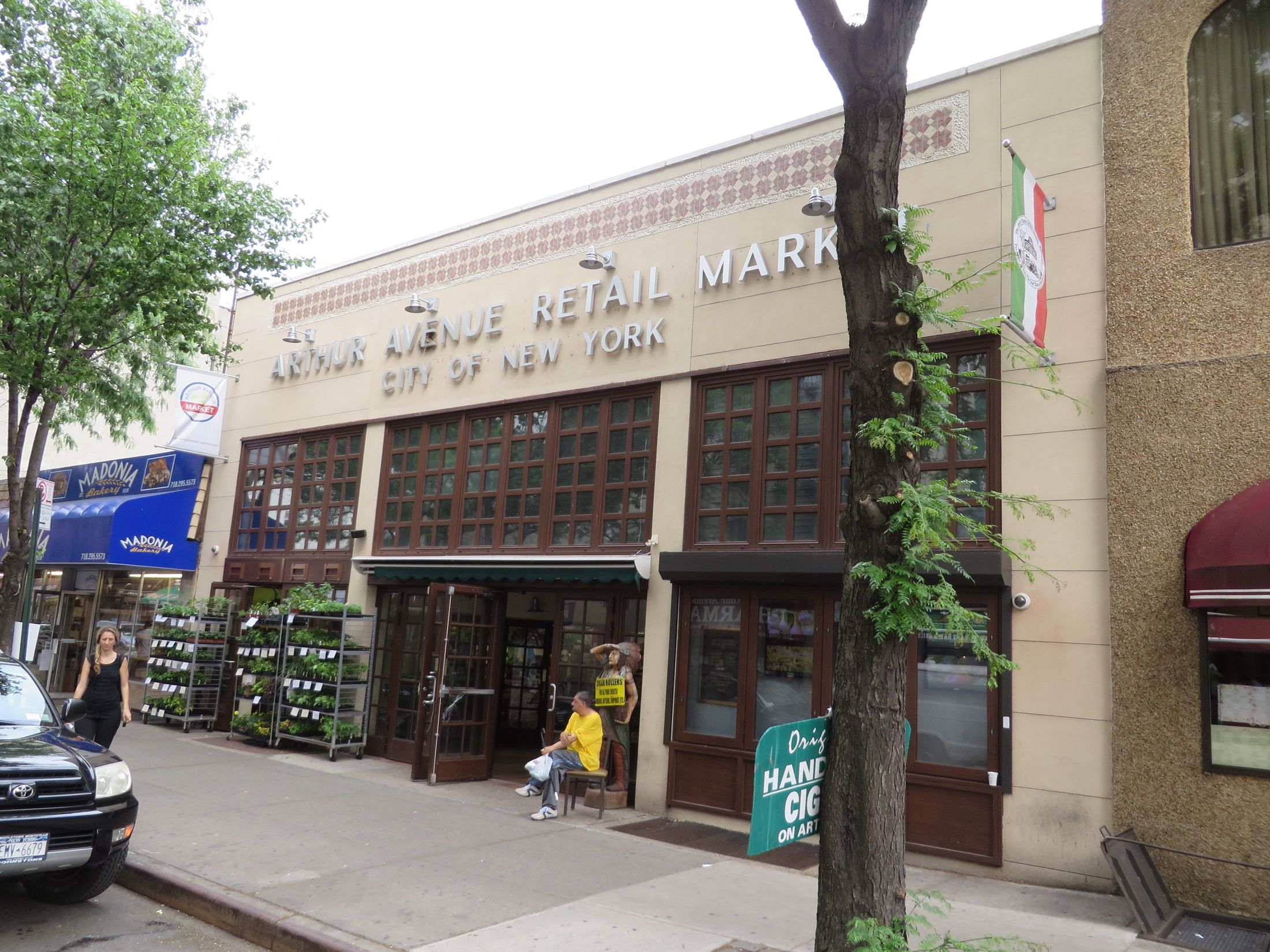
In the 1930s New York had tens of thousands of pushcart vendors, and Mayor Fiorello La Guardia set about moving them into enclosed public markets. The Arthur Avenue Retail Market opened on October 29, 1940, with room for more than a hundred vendors under one roof, and it is still there: butchers, produce, delis, a cigar roller and a bar under one skylight, with the vendors side by side so a visitor can compare in ten minutes what would take an hour on the street. The note on the market walks through it stall by stall.
The festivals
Two events shape the avenue's year: Ferragosto, the street festival the merchants throw at summer's end, and the Giglio di Belmont, the feast tied to Our Lady of Mount Carmel, when a towering structure is hoisted and danced through the streets by its team of lifters. Dates move each year, and the organizers publish them. The festivals note has more.
On film
Belmont has been on screen for seventy years, from Marty in the 1950s to A Bronx Tale in the 1990s, and the owners of Mario's said no to The Godfather, preferring to be known for the dining room rather than for a murder scene; The Sopranos filmed there in 1999 instead. The film note follows the locations.

The avenue as a neighbor
For the students who rent on the streets to either side, the avenue is less a destination than a kitchen and a hallway: the bakery on the way to class, the deli counter at lunch, the restaurant a parent books on a visit weekend. That is the relationship this guide is written from, and it is why the avenue is treated here as part of a neighborhood rather than as a list of places to eat.